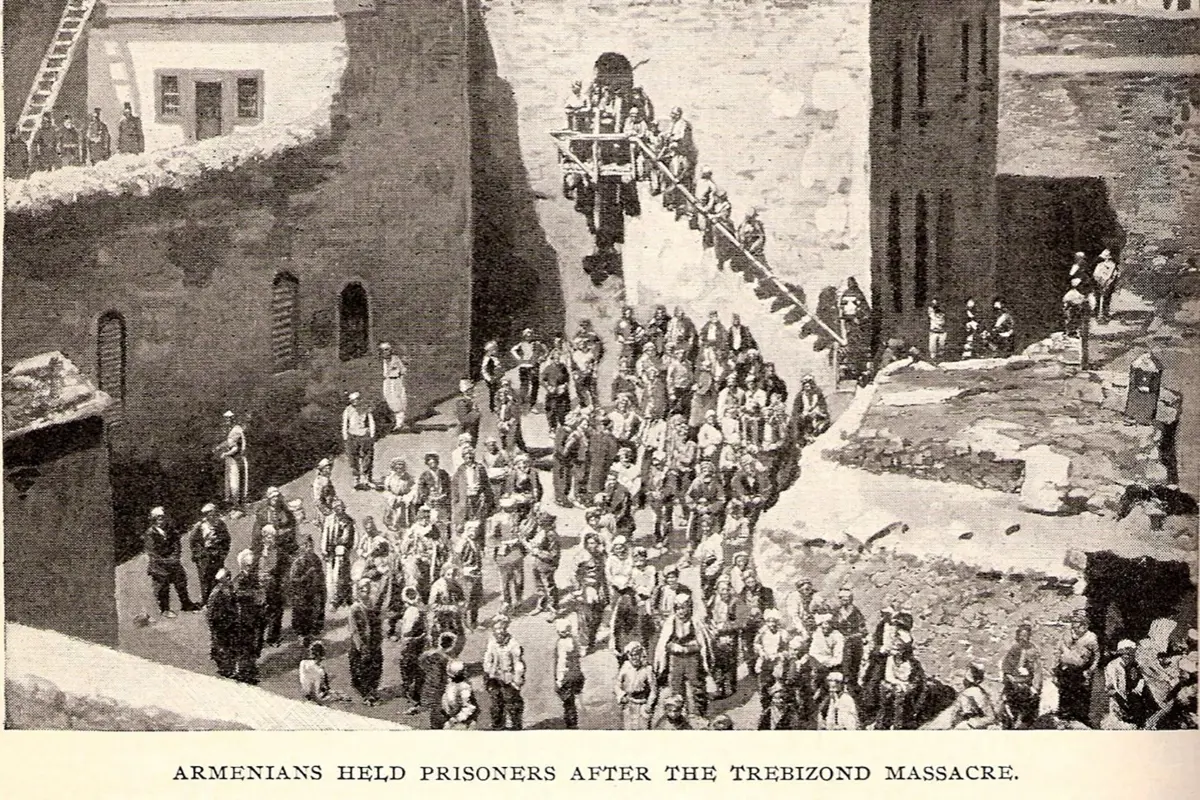
Marking the Armenian Genocide: Resources for Congregations this 24 April (2)
Tomorrow, 24 April, is the annual day of observance of the Armenian Genocide. The Friends of Middle East have compiled prayers, films, podcasts and reading to help congregations and individuals engage with this important commemoration.
In 301 AD, Armenia became the first nation in the world to declare itself Christian, almost a quarter of a century before the Council of Nicaea. That ancient Christian community suffered terribly between 1915 and 1923, when an estimated 1.5 million Armenians were killed and a further one million displaced in what is now recognised as the Armenian Genocide. Winston Churchill, who witnessed the events of that era, described it at the time as "the unnamed crime," as the language of genocide did not yet exist.
Australia was not a bystander. Reports reached this country through journalists covering Gallipoli and through Australian prisoners of war. The Congregational, Methodist and Presbyterian churches, the very denominations that formed the Uniting Church in 1977, responded by holding Armenian Sundays to raise funds, sending medical and food supplies, and helping establish a large orphanage north of Beirut. The Armenian Relief Fund, launched in Sydney in 1915, has since been recognised as Australia's first organised humanitarian response to an overseas crisis.
The UCA's commitment
At its triennial Assembly in Perth in July 2015, the Uniting Church in Australia formally acknowledged the Armenian Genocide and committed to marking 24 April each year as a day of observance and commemoration. The Assembly requested that prayers and educational and liturgical resources be made available to all congregations for use on the day. In our own Synod, there is an Armenian congregation at Willoughby and Armenian ministers in service, a living testament to the resilience and continuity of this ancient Christian people.
Ways to engage this year
The Friends of Middle East (FME), a network of Uniting Church members committed to nurturing relationships between our church and the ancient churches of the Middle East, have brought together the following resources for congregations and individuals wishing to mark the day.
Film
The Golden Chain of Mercy
A documentary focused on the Australian and New Zealand response to the Armenian Genocide, featuring reflections from Uniting Church leaders including former General Secretary the Revd. Jane Fry and former President the Revd. Charissa Suli. The film has been screened several times in our Synod. To arrange a congregation screening, contact the Revd. Dr. Krikor Youmshajekian at varak89@gmail.com. To support the costs behind the film, donate here.
Film
The Promise (Apple TV)
A feature film depicting the Armenian Genocide. An accessible entry point for congregations or small groups exploring the history for the first time. Wikipedia page.
Podcast
Empire with William Dalrymple and Anita Anand
Episodes 36 and 37 are dedicated to the Armenian Genocide. A third episode, "Churchill's Photographer," tells the story of Yousuf Karsh, who escaped the genocide as a child. All three are available on Spotify and linked from the FME website. Episode 36 | Episode 37 | Churchill's Photographer
Reading
Newspaper articles
John Kifner, 'The Armenian Genocide', The New York Times | Colin Tatz, '100 Years On: Australia Still Out of Step on the Armenian Genocide', The Conversation
Prayer
Liturgical resources
A prayer resource for use in worship on 24 April is available as a download. Hymn suggestions including 'Christ be our light' and 'Faith of our Fathers' are available at the FME website.
About Friends of Middle East
The Friends of Middle East (FME) is a network of Uniting Church members committed to nurturing relationships between our church and the churches and communities of the Middle East, including in Armenia, Lebanon and Syria. The FME has recently launched a new website where all Armenian Genocide observance resources, including prayers, hymns, films and further reading, are gathered in one place.
Related Reading
Earlier this year, Synod News published a reflection on the Friends of Middle East network, its history, its aims, and how our Synod is already offering practical support to the Near East School of Theology in Beirut. A good place to start if you want to know more about FME and how to get involved.
Armenian Martyrs’ Day Prayer
Our loving and gracious Heavenly Father, for all those who stood firm in their Christian faith in the face of persecution, exile and death.
We praise You, O God.
For all who endured the genocide,
We praise You, O God.
For all those Armenian men, women and children who were deported, driven in death marches, and massacred mercilessly because they refused to deny Christ,
We lift up our cries to You, O God.
For all those who directly or indirectly participated in the murder of this small Christian nation and washed their hands saying, “I am innocent of their blood,”
We lift our cries to You, O God.
For all those who continue to trample on truth, justice and human rights,
We lift our cries to You, O God.
That this nation may not perish bur prosper under Your fatherly care,
We pray to You, O God.
That You may uproot from our hearts every trace of hatred and the spirit of vengeance.
We pray to You, O God.
That those of us who are the descendants of those noble martyrs may have a deep sense of gratitude and a deep sense of responsibility.
We pray to You, O God.
That we may recognize they died for their faith that we might live for it,
We pray to You, O God.
Grant that we may value the freedom and the security we are privileged to enjoy in this beautiful country.
Hear our prayer, O God.
Grant that Your power of resurrection may inspire us to live as a righteous people prepared for every good work,
Hear our prayer, O God.
Grant that we may be a compassionate, forgiving and loving people.
Hear our prayer, O God, and grant us a right spirit. Amen!